Tattoo & body art
Black nitrile gloves for tattoo professionals
Flexible black nitrile options for setup, tattooing and cleanup, with bulk formats for studios that need consistent daily supply.

Choose for the task
One workplace. Different glove demands.
Tattoo work combines fine motor control with a high frequency of glove changes. Station setup, the procedure itself, contact with shared surfaces and breakdown must be planned as separate steps so contaminated gloves do not bridge clean and dirty zones.
Correct fit and reliable size stock support precision, but gloves are only one part of an exposure-control program. Disposable nitrile is not needle-proof and must be changed according to applicable rules and the studio procedure.
Common workflows
Plan glove use around the actual work.
Different steps create different demands. Use these workflow examples to define glove-change points, select a practical starting thickness and identify tasks that need a separate PPE review.
Room & station setup
Use clean gloves while placing barriers and preparing supplies, then change before the procedure whenever the setup process or touched surfaces require it under the studio protocol.
Tattoo procedures
A close fit and tactile feel support machine control and detailed work. Stock each artist’s correct size; loose fingertips reduce precision, while an overly tight glove can fatigue the hand.
In-procedure changes
Replace single-use gloves when contaminated, torn, punctured or when their barrier function is compromised. Never wash or disinfect a disposable pair for reuse.
Ink, equipment & barriers
Plan the workflow so contaminated gloves do not touch clean drawers, phones or shared containers. Gloves are one element of an exposure-control and cross-contamination program.
Breakdown & surface cleanup
Use the PPE specified for the disinfectant and cleanup task. Remove and dispose of contaminated single-use gloves using the studio’s approved procedure.
Inventory by artist & size
High glove-change frequency makes reliable case stock essential. Keep sealed backup boxes separate from the work zone and track consumption by artist, service mix and appointment volume.
Selection guide
Build a specification your team can follow.
A useful glove program is specific enough for employees and purchasing teams to repeat. Start with four decisions, then confirm the safety boundary for each substance and task.
Thickness
Choose enough durability for the procedure without losing machine control or tactile feedback. Fit and barrier integrity matter more than selecting the thickest glove available.
Fit & texture
Fingers should seat fully without baggy tips, while the palm should close comfortably. A consistent size specification helps artists maintain repeatable tactile control.
Color & process control
Black minimizes visible ink staining and suits studio presentation. A second color can identify setup or cleaning tasks if the studio uses a written color-code system.
Pack plan
Estimate by artists, appointments, procedure length and cleanup cycles. Track size consumption separately so one missing size does not interrupt the studio schedule.
| Task profile | Prioritize | Practical starting point | Check before use |
|---|---|---|---|
| Station setup | Clean workflow and easy changes | Powder-free close-fitting nitrile | Studio exposure-control procedure |
| Tattoo procedure | Tactile control and barrier integrity | Artist-selected fit and thickness | Change triggers and local requirements |
| Breakdown and disinfection | Contamination control and chemical suitability | PPE specified for cleanup product | Disinfectant label, SDS and disposal process |
Recommended starting points
Compare UYKKE options for the work.
These products are practical starting points—not blanket approvals for an entire industry. Compare fit, thickness, texture, pack format and current availability, then confirm product-specific suitability before use.
-
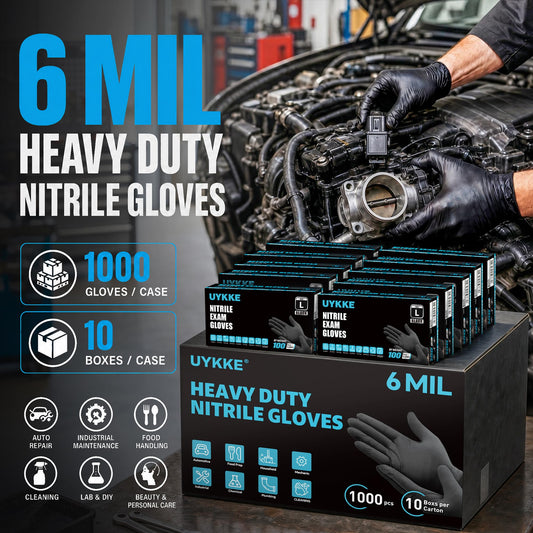
UYKKE 6 Mil Black Nitrile Gloves — 1000 Count
Regular price From $81.96 USDRegular price View on Amazon
Sold out
View on Amazon
Sold out -
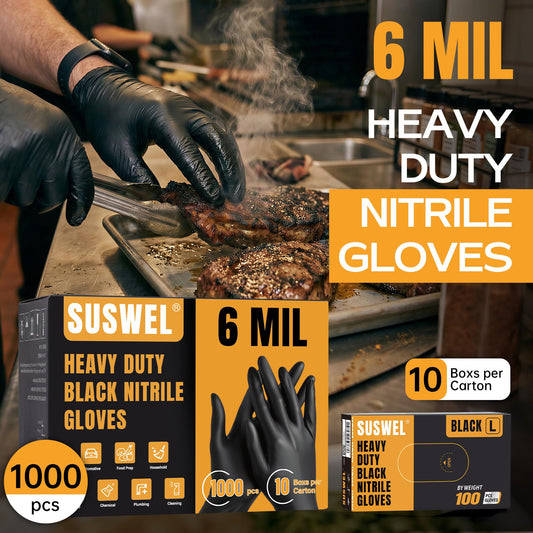
UYKKE SuSwel Series 6 Mil Black Nitrile Gloves — 100 / 1000 Count
Regular price From $14.99 USDRegular price -
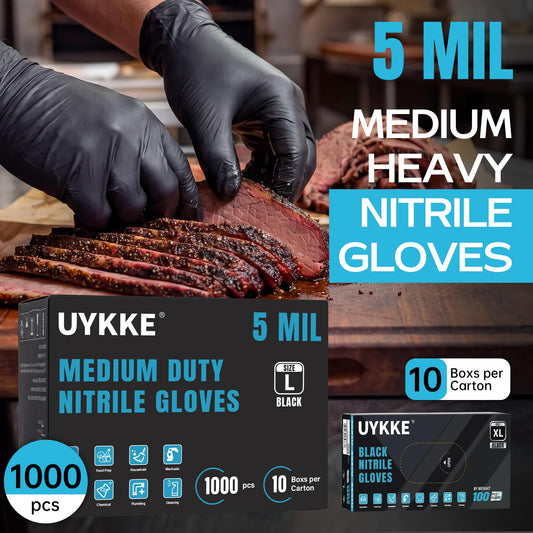
UYKKE 5 Mil Black Nitrile Gloves — 1000 Count
Regular price From $71.96 USDRegular price




Supply planning
Keep the right glove available at the right station.
Start with a simple monthly baseline: employees per shift × pairs per employee × operating days. Then add task changes, multiple shifts, seasonal peaks and reserve stock. Track usage by size and glove type, not only by total cases.
For studios, plan by artist, appointment length, setup and breakdown. Size-level tracking is critical because one missing artist size can interrupt an otherwise well-stocked day.
Define the approved tasks
Write down where each glove may be used, where it must be changed and which hazards require a different product.
Stock the real size mix
Use employee size data and consumption history. Oversized and undersized gloves reduce control and can drive avoidable waste.
Set a reorder point
Include supplier lead time, peak demand and reserve stock. Review unusual usage as an operating signal instead of automatically increasing the order.
Industry FAQ
Practical questions before you standardize a glove
Why are black nitrile gloves popular in tattoo studios?
Black provides a professional appearance and makes ink staining less visually distracting. The studio should still choose by fit, barrier integrity and its exposure-control procedure—not color alone.
How should tattoo gloves fit?
Fingers should seat fully without baggy tips, and the artist should be able to close the hand without excessive tension. Stocking each artist’s correct size supports tactile control and reduces workarounds.
When should an artist change disposable gloves?
Change gloves when contaminated, torn, punctured or when barrier function is compromised, and at every change point required by the studio’s infection-control procedure. Never wash disposable gloves for reuse.
Are nitrile gloves needle-proof?
No. Disposable nitrile gloves are not needle-stick or puncture-proof. Sharps handling, immediate disposal and the studio’s bloodborne-pathogens controls remain essential.
Can the same pair touch the client, phone and supply drawers?
That creates a cross-contamination path. Plan the station and barriers so contaminated gloves do not touch clean or shared surfaces; change gloves according to the exposure-control procedure.
What gloves should be used for station disinfection?
Use the PPE specified by the disinfectant label and SDS. The glove used during a procedure is not automatically suitable for concentrated cleaners or extended surface-cleaning contact.
How much glove stock does a studio need?
Estimate from artists, appointments, procedure length, setup and breakdown cycles, then track each size separately. Maintain sealed reserve cases away from the contaminated work zone.
Can studios request case pricing or samples?
Yes. Submit the wholesale request form with artist count, sizes, preferred thickness and estimated monthly usage. Sample availability is discussed directly by email.
Business supply
Need help matching the glove to the job?
Tell us the application, sizes, preferred thickness and estimated volume. We can discuss U.S. inventory, wholesale pricing, sample availability and private label.