Food service & BBQ
Nitrile gloves for food prep and busy kitchens
Glove options for prep lines, catering, BBQ and food-processing workflows where hygienic changes, grip and dependable case supply matter.

Choose for the task
One workplace. Different glove demands.
In food service, glove performance is inseparable from workflow. Ready-to-eat assembly, raw preparation, BBQ handling, catering and chemical sanitation each create different change points and hazards. A dependable supply plan matters as much as thickness.
Single-use gloves do not replace handwashing, are intended for one task and are not knife or heat protection. Confirm food-contact suitability for the exact SKU and follow the food code and operating procedures that apply to the facility.
Common workflows
Plan glove use around the actual work.
Different steps create different demands. Use these workflow examples to define glove-change points, select a practical starting thickness and identify tasks that need a separate PPE review.
Ready-to-eat assembly
Single-use gloves can support no-bare-hand-contact procedures for salads, sandwiches, garnishes and other ready-to-eat foods. Use one pair for one task and discard it after interruptions, damage or soiling.
Raw ingredient prep
Build clear change points between raw animal foods, produce, cooked foods and cleaned equipment. Gloves do not replace handwashing or the separation controls already built into the kitchen.
BBQ & protein handling
Texture and a secure fit help during portioning, seasoning and handling suitable foods. Disposable nitrile gloves do not protect against hot pans, steam, knives or smoker surfaces.
Catering & service lines
Portable operations need enough sizes and backup boxes at every station. Plan stock around covers, menu complexity and the number of task changes—not only headcount.
Packaging & commissary work
Color coding can help distinguish stations or processes when it is part of a documented operating procedure. Confirm food-contact suitability for the exact UYKKE SKU before use.
Cleaning & sanitation
Food handling and chemical sanitation are different tasks. Remove food-prep gloves before cleaning, follow the chemical label and SDS, and use the specified protective glove for concentrated products.
Selection guide
Build a specification your team can follow.
A useful glove program is specific enough for employees and purchasing teams to repeat. Start with four decisions, then confirm the safety boundary for each substance and task.
Thickness
Frequent-change prep often favors lighter gloves; BBQ or longer handling may favor a thicker option. The selected SKU still needs to be suitable for food contact.
Fit & texture
Secure cuffs and correct sizing support fast changes and controlled handling. Texture may help grip, but it does not replace utensils or safe knife technique.
Color & process control
Use color only as part of a documented station or allergen-control process. Do not infer food-contact status from glove color.
Pack plan
Forecast by covers, stations, prep shifts and mandated task changes. Keep backup cases away from heat and contamination but close enough to prevent workarounds.
| Task profile | Prioritize | Practical starting point | Check before use |
|---|---|---|---|
| Ready-to-eat food assembly | Single-task use and easy changes | Food-contact-suitable, powder-free glove | Exact SKU and local food code |
| Raw prep, BBQ and portioning | Fit, grip and station supply | Choose thickness for task duration | Heat, knife and cross-contamination controls |
| Sanitation and concentrates | Chemical label compliance | Glove specified by label or SDS | Dilution, contact time, splash and ventilation |
Recommended starting points
Compare UYKKE options for the work.
These products are practical starting points—not blanket approvals for an entire industry. Compare fit, thickness, texture, pack format and current availability, then confirm product-specific suitability before use.
-
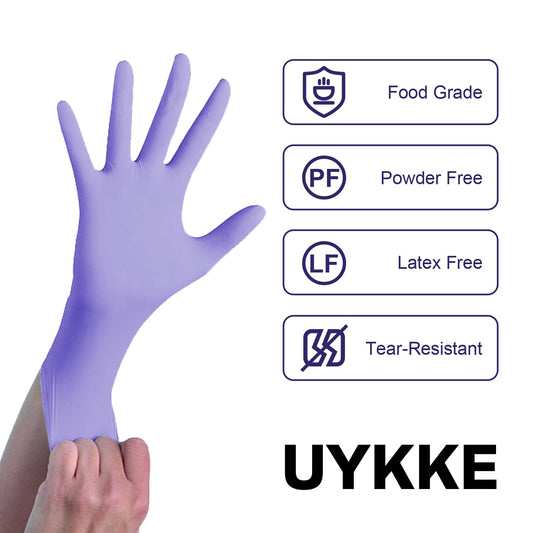
UYKKE 4 Mil Purple Nitrile Gloves — 2000 Count
Regular price $99.99 USDRegular price View on Amazon
Sold out
View on Amazon
Sold out -
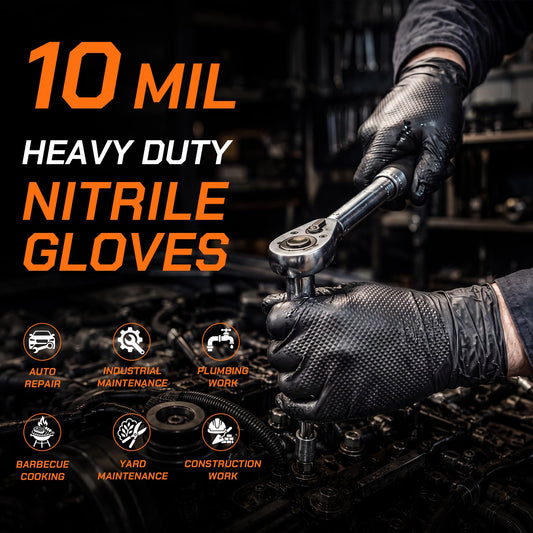
UYKKE 10 Mil Black / Orange Nitrile Gloves — 100 / 1000 Count
Regular price From $23.96 USDRegular price



Supply planning
Keep the right glove available at the right station.
Start with a simple monthly baseline: employees per shift × pairs per employee × operating days. Then add task changes, multiple shifts, seasonal peaks and reserve stock. Track usage by size and glove type, not only by total cases.
For kitchens, model prep, service and sanitation separately. Covers alone understate demand when the menu requires frequent changes between raw ingredients, ready-to-eat assembly and cleanup.
Define the approved tasks
Write down where each glove may be used, where it must be changed and which hazards require a different product.
Stock the real size mix
Use employee size data and consumption history. Oversized and undersized gloves reduce control and can drive avoidable waste.
Set a reorder point
Include supplier lead time, peak demand and reserve stock. Review unusual usage as an operating signal instead of automatically increasing the order.
Industry FAQ
Practical questions before you standardize a glove
Can disposable gloves replace handwashing in a kitchen?
No. Gloves are not a substitute for proper handwashing. Employees should follow the applicable food code and facility procedure before donning gloves and when changing tasks.
When should single-use food-handling gloves be changed?
Use a pair for one task only and discard it when damaged or soiled, when work is interrupted and when moving between raw food, ready-to-eat food, sanitation or other incompatible tasks.
Are all nitrile gloves food safe?
No blanket assumption should be made. Food-contact suitability is product-specific. Confirm the exact UYKKE SKU and follow federal, state and local food-handling requirements.
What thickness works for restaurant and BBQ use?
Lighter gloves can suit frequent-change prep and assembly; a thicker textured option may suit longer handling and BBQ workflows. Disposable nitrile is not heat protection and should not contact hot equipment.
Can glove color support allergen or station control?
Color can reinforce a documented process for stations, allergens or raw-versus-ready-to-eat work. It does not replace labeling, cleaning, handwashing or employee training.
Are nitrile gloves knife resistant?
No. Disposable nitrile gloves are not slash- or cut-resistant. Use safe knife technique and task-specific cut protection where the hazard assessment or kitchen procedure requires it.
How should a kitchen forecast glove demand?
Estimate by prep shifts, covers, stations and required task changes, then add catering events and seasonal peaks. Monitor each size separately and maintain backup stock outside splash, heat and contamination zones.
Can restaurants and commissaries request wholesale pricing?
Yes. Use the wholesale request form and include the exact food-handling tasks, preferred colors, sizes, pack format and estimated monthly volume.
Business supply
Need help matching the glove to the job?
Tell us the application, sizes, preferred thickness and estimated volume. We can discuss U.S. inventory, wholesale pricing, sample availability and private label.