Automotive & mechanic
Nitrile gloves for automotive work
Task-based glove recommendations for repair shops, technicians, detailers and maintenance teams working around grease, oil, parts and frequent glove changes.

Common workflows
Plan glove use around the actual work.
Diagnostics, greasy repairs, fluid handling and cleanup do not have the same glove demands. Match fit, texture and durability to the job.
Inspection & diagnostics
Electrical connectors, clips and fasteners reward fingertip control. A thinner close-fitting glove can be more useful than a bulky option during scan-tool work and visual inspection.
Oily mechanical repair
Texture can support grip on filters, brakes and greasy parts. Longer or abrasive work may justify 7–10 mil, but disposable nitrile is not cut- or impact-protective PPE.
Fluids, detailing & paint prep
Coolant, cleaners, coatings and solvents have different hazards. Check the label, SDS and compatibility data for the exact substance and exposure.
Cleanup & hazard boundaries
Routine wipe-down differs from sharp parts, hot components and unknown spills. Those hazards may require chemical, cut, heat or other task-specific protection.
Selection guide
Build a specification your team can follow.
A useful glove program is specific enough for employees and purchasing teams to repeat. Start with four decisions, then confirm the safety boundary for each substance and task.
Thickness
Use 5–7 mil for inspection and light service; consider 8–10 mil for longer, dirtier mechanical work. Thickness may improve durability, but does not prove chemical, cut or heat protection.
Fit & texture
Raised texture can support grip on oily parts. Correct sizing reduces loose fingertips around fasteners and excessive hand tension during longer repair work.
Color & process control
Black hides grease; orange improves visibility in a busy bay. Color can support task separation, but it is not evidence of thickness or protection level.
Pack plan
Estimate by technicians, repair order mix and pairs per billed day. Separate quick-use boxes from heavier-duty stock so the thickest glove is not consumed for every task.
Related operating guides
Go deeper into the workflow.
Use these guides to define task boundaries, glove-change points and purchasing inputs before selecting a product.
 Glove guide
Mechanic Nitrile Gloves: Task Selection and Change Points
Map disposable glove selection and changes across diagnostics, fluid service, wheel work, customer interiors and bay cleanup.
Read the guide Glove guide
Disposable vs Reusable Mechanic Gloves: Task Guide
Choose disposable nitrile or reusable mechanic gloves by repair task, keeping grip and clean changes separate from cut, impact, heat and chemical h...
Read the guide Glove guide
Heavy-Duty Mechanic Gloves: A 5–10 Mil Task Guide
Compare 5, 6, 7 and heavy-duty 8/10 mil disposable nitrile options by automotive task without confusing thickness with a hazard rating.
Read the guide Glove guide
Bulk Mechanic Gloves: Case Planning for Repair Shops
Forecast mechanic-glove cases from work orders, pairs per job, size mix and lead time instead of relying on a blanket monthly estimate.
Read the guide Glove guide
Oil Change Gloves: A Clean-to-Dirty Service Workflow
Set glove-change points from vehicle intake through drain, filter, refill, cabin reset and used-oil handling.
Read the guideRecommended starting points
Compare UYKKE options for the work.
These products are practical starting points—not blanket approvals for an entire industry. Compare fit, thickness, texture, pack format and current availability, then confirm product-specific suitability before use.
Why UYKKE
Factory-direct value, proven in the market.
UYKKE gloves are produced directly with one of China’s leading manufacturers of medical and protective products—without an added trading intermediary—for consistent quality, responsive supply and competitive case pricing.
Manufacturing capability is not a medical-grade or hazard claim for every SKU. Confirm the exact product documentation and task requirements.
-
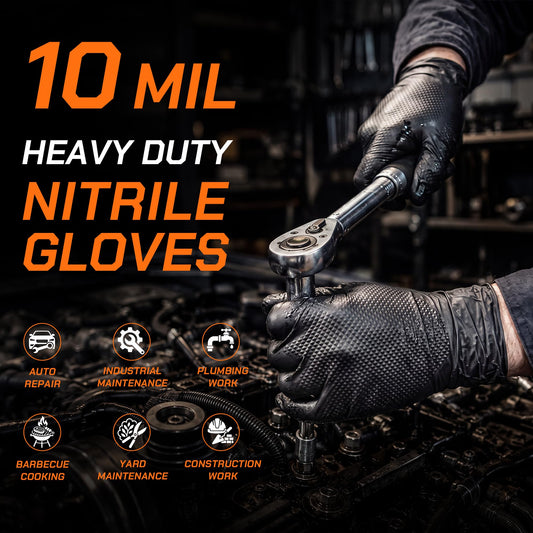
UYKKE 10 Mil Black / Orange Nitrile Gloves — 100 / 1000 Count
Regular price From $29.99 USDRegular price View on Amazon
-
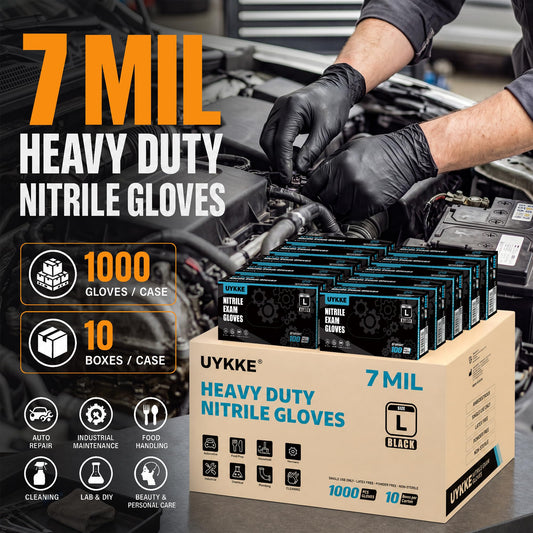
UYKKE 7 Mil Black Nitrile Gloves — 1000 Count
Regular price From $96.96 USDRegular price -
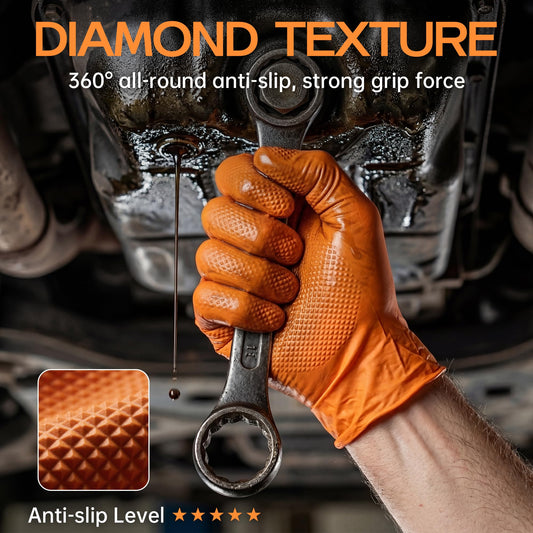
UYKKE SuSwel Series 8 Mil Orange Nitrile Gloves — 1000 Count
Regular price From $119.98 USDRegular price




Supply planning
Keep the right glove available at the right station.
Start with a simple monthly baseline: employees per shift × pairs per employee × operating days. Then add task changes, multiple shifts, seasonal peaks and reserve stock. Track usage by size and glove type, not only by total cases.
For repair shops, compare glove use with technician count and repair-order mix. Unexpected consumption can point to poor sizing, excessive snagging or employees using a heavy-duty glove for light inspection work.
Industry FAQ
Practical questions before you standardize a glove
What thickness is a good starting point for mechanics?
For inspection, diagnostics and light service, 5–7 mil often balances dexterity and durability. For longer greasy or abrasive tasks, a textured 7–10 mil option may reduce tear frequency. Validate the choice against the actual job.
Are thicker mechanic gloves always safer?
No. Thickness can improve mechanical durability but does not prove chemical, cut, heat, impact or electrical protection. The hazard, substance and exposure time determine the required glove.
Do textured nitrile gloves help with oily parts?
Raised texture can support grip on wet or greasy parts, tools and filters. It does not eliminate the need to control spills, clean tools or replace a compromised glove.
Can disposable nitrile gloves be used with brake cleaner or solvents?
Not by default. Solvent formulations vary and some can permeate nitrile quickly. Review the chemical label, SDS and compatibility data for the exact glove; use a different chemical glove when required.
Are disposable nitrile gloves cut- or heat-resistant?
No. They are not a substitute for cut-resistant, impact, welding, electrical or heat-protective gloves. Do not use them around hot components or sharp edges as the only protection.
Why offer both black and orange mechanic gloves?
Black suits grease-heavy work and a familiar shop look; orange improves visibility in a busy bay. Color can also separate light-duty and heavier-duty stock, but should never be used as the only specification.